Mack’s silicone earplugs for air-conditioner noise: my experience and later updates
I tried Mack’s moldable silicone earplugs because my Sharp Airest air conditioner was too loud to sleep with. The first night went well, but later updates record discomfort, itching, and why I eventually stopped using them.
Note: This article was first published more than a year ago.
- Headphone and cable models, discontinuations, and replacements change with manufacturer policy. Check current official specifications.
- Measures against air-conditioner power-frequency noise depend on installation and wiring. This article describes only one example.
- Listening impressions depend on equipment and hearing. Consult a professional about medical hearing concerns.
Recent summers have brought one hot night after another. Two or three years before writing this, I bought a Sharp Airest air conditioner because of my hay fever. It offers air purification and is designed to resist mold. After two or three years it still had no mold, and my symptoms during pollen season had also eased. In those respects, it is excellent. But the Airest is ridiculously loud.
Related products: Search Amazon for SHARP Airest air conditioners (Ad)
Even its quiet mode sounds about as loud as an ordinary home air conditioner.
At maximum power, it is loud enough that I cannot hear the television.
It sounds something like a roaring, rattling whoosh.
With these hot summer nights, I cannot sleep with the Airest left running.
Turn it off, though, and it is too hot to sleep.
The sleepless nights kept adding up.
I use Anker Soundcore Liberty 4 earbuds as sleeping headphones. Noise cancellation makes the air conditioner much less noticeable, but when I turn onto my side, they press against the pillow uncomfortably. I cannot sleep with them in.
Related products: Search Amazon for Anker Soundcore Liberty 4 (Ad)
Anker also sells Soundcore Sleep earbuds specifically for sleeping.
They are thin and supposedly designed not to feel uncomfortable when you lie on your side.
On closer inspection, they do not have noise cancellation. They seem to function as sleeping earbuds by playing white noise.
I thought that sounded much like using earplugs, so I did not buy them.
I had previously bought ordinary earplugs and earbud-shaped plugs without any headphone function. None worked well for me: I either found them distracting or woke to discover that the earbud-shaped ones had fallen out.
Mack’s earplugs: something like silicone putty
Then I found Mack’s moldable silicone earplugs. I bought them and initially got the best result of any earplug I had tried.
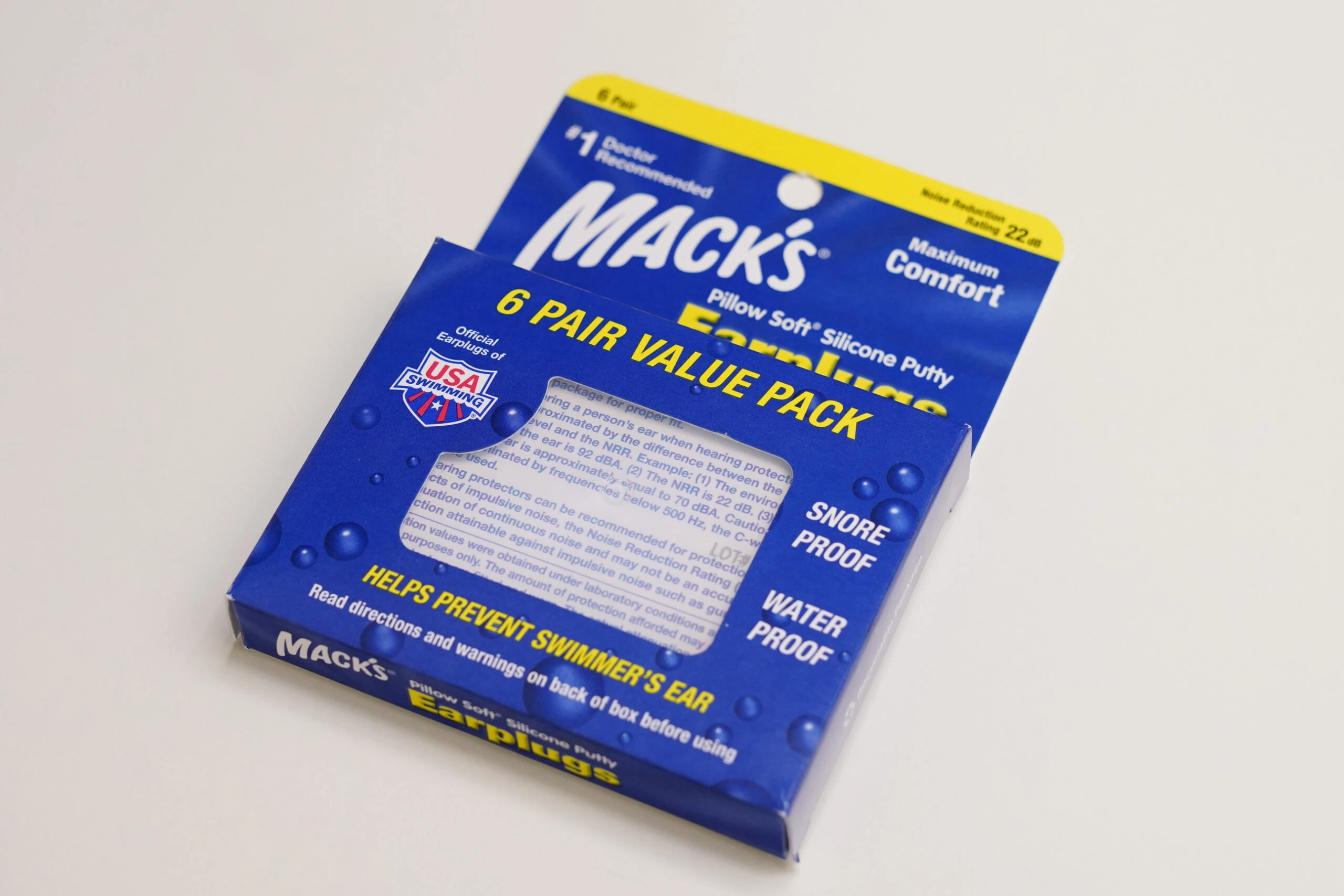 Here is the manufacturer description quoted in the original article:
https://www.macksearplugs.com/product-category/earplugs-for-sleeping/
"A bestselling American earplug brand recommended by doctors.
Since 1962, Mack’s has worked to provide innovative, high-quality hearing protection, sleep aids, and swimming ear protection at the best possible value.
Use them for music, sleep, swimming, showers, studying, travel, noise, or discomfort when flying.
They can be used until they become dirty or lose their tackiness, with about five uses as an upper guideline.
"That is the description.
They seem to be a long-established earplug.
Related products: Search Amazon for Mack's Pillow Soft silicone earplugs (6 pairs) (Ad)
Only about five uses.
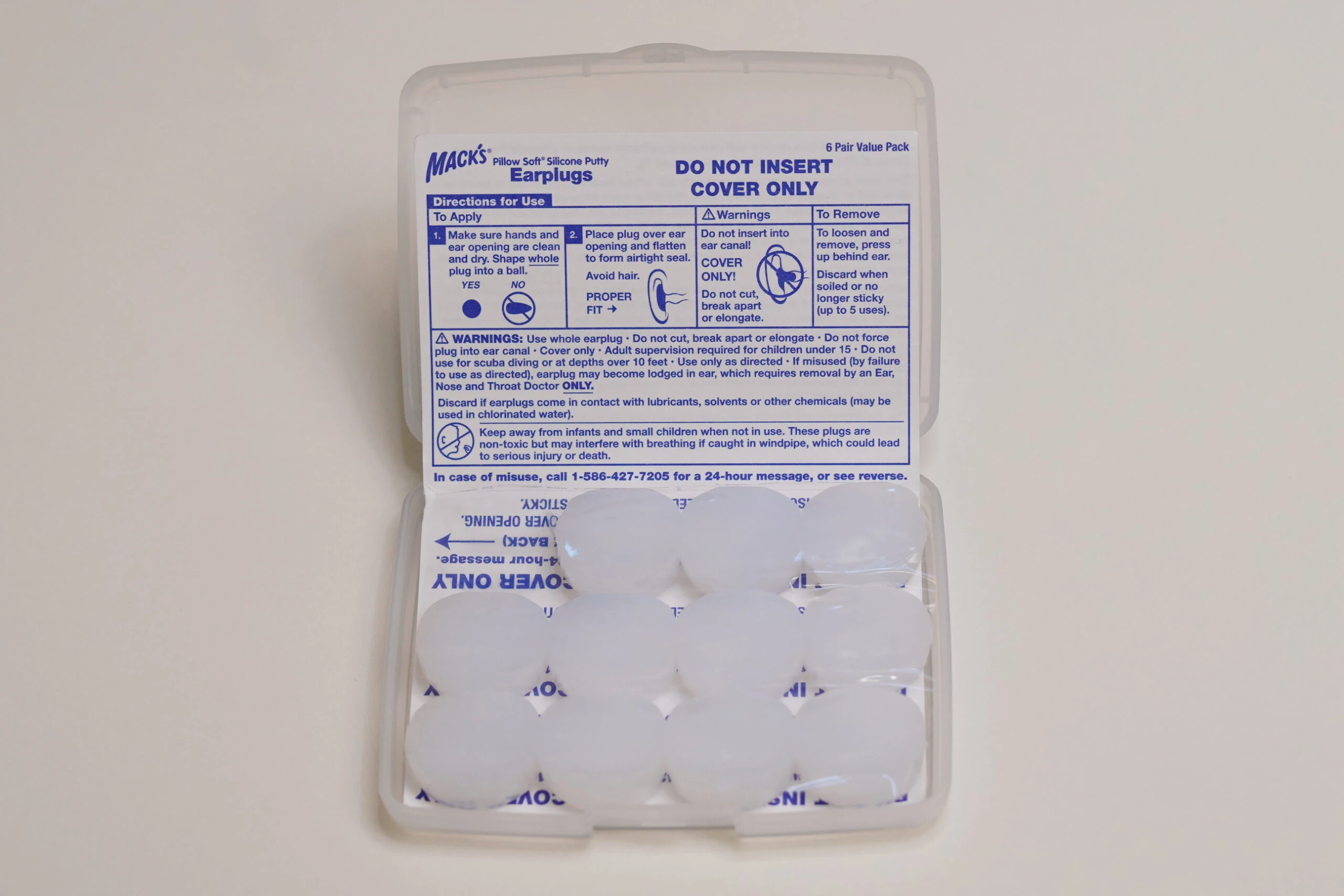
A case contains 12 plugs, or six pairs, which works out to roughly a month. At about ¥600–1,000, whether that feels cheap is a matter of perspective. A plug can be split in half to stretch the quantity, although a full plug in each ear seemed quieter to me.
They are soft silicone, just as they look. Roll one into a ball and use it to cover the ear opening.
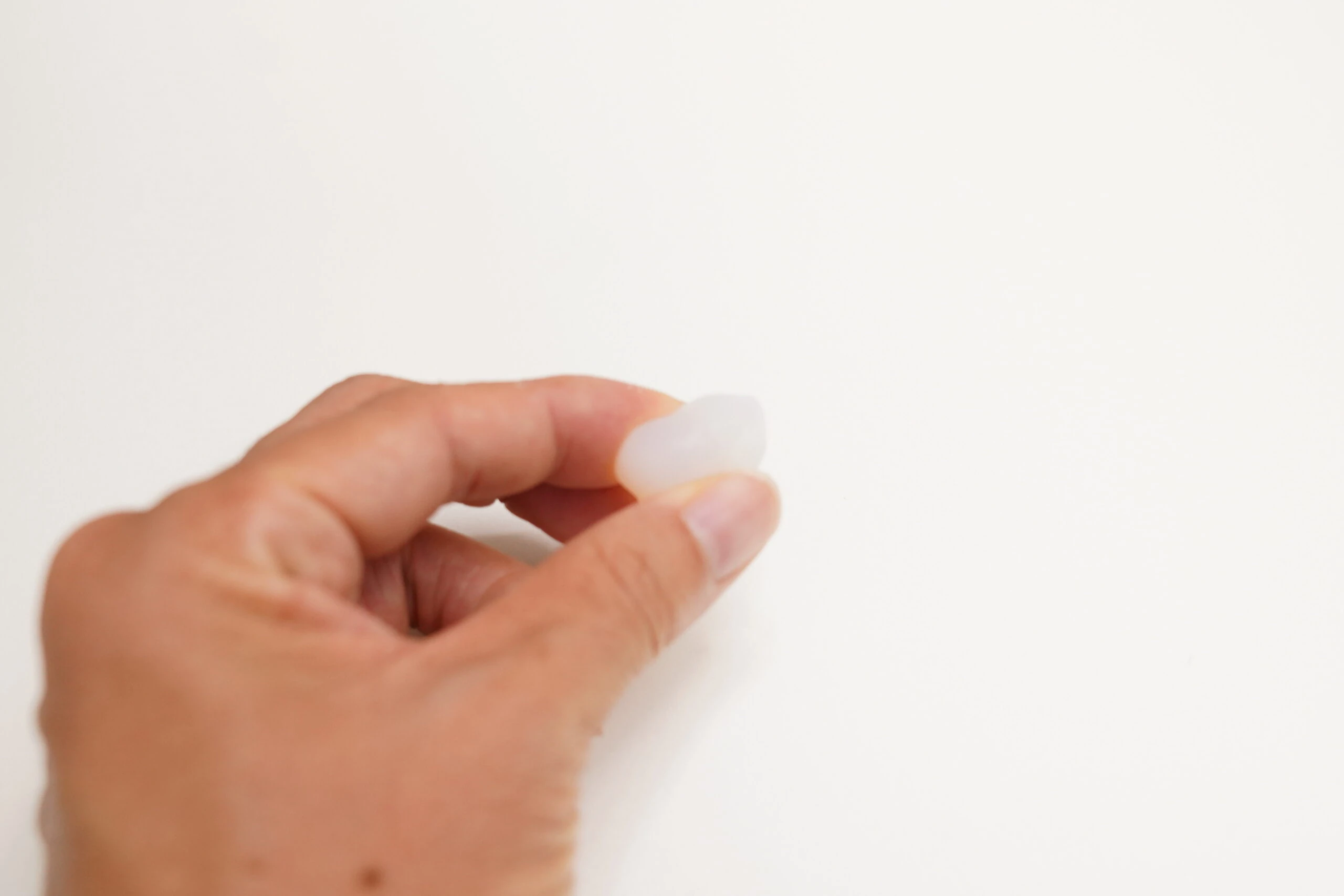
Noise Reduction Rating (NRR) – 22 decibels
These earplugs are labeled with a 22-decibel noise reduction rating. NRR stands for Noise Reduction Rating. Decibels express sound level; the following is the rough scale used here.
- 0 dB: the faintest audible sound, near the limit of human hearing
- 10 dB: a whisper of wind, an extremely quiet sound
- 20 dB: rustling leaves or an extremely quiet room
- 30 dB: a library, whispering, or a very quiet setting
- 40 dB: a quiet home interior or calm office
- 50 dB: quiet conversation or ordinary office background sound
- 60 dB: normal conversation or an air conditioner in ordinary operation
- 70 dB: passing traffic, a vacuum cleaner, or a noisy air conditioner
Mack’s earplugs do not make everything silent. My rough comparison was that a 22-decibel reduction would take the 60 dB sound of normal conversation or an operating air conditioner down toward the 30–40 dB range of a library, whispering, a quiet home, or a calm office. With the plugs in, I could still hear the air conditioner, but it no longer felt loud. The roaring, rattling noise became more of a steady soft whoosh, closer to white noise. An air conditioner that already makes only a soft, steady whoosh becomes almost inaudible.
The first night: I slept comfortably until morning
When I actually slept with them in, they did not bother me and I slept well until morning. They do not suit everyone, though. The one- and two-star Amazon reviews mainly raised the following complaints.
1. Not enough sound isolation.
With the stated 22-decibel rating, you can still hear someone speaking nearby, and an air conditioner does not become completely silent. Some people therefore find the isolation insufficient. Poor fitting might also play a part, but the sound does not drop to zero.
2. They fall apart, feel too soft, or are distracting.
The guideline is only around five uses. They deteriorate and pick up debris easily; these are disposable consumables. One reviewer said they used a pair for a month. Prolonged use will leave them ragged, and they soon look dirty.
3. The air pressure during fitting feels unpleasant against the eardrum.
Fitting them creates a seal. Trying to push them into the ear increases the pressure, and inserting them quickly can hurt. Slowly kneading them into place did not cause that problem for me, but I understand why some people dislike the sensation.
4. They feel hot and humid.
Because the ear opening is covered, some people will feel moisture building up. Removing them certainly brings a sense of relief.
After the first day, the used plugs did not disgust me because they were mine, but somebody else’s would look very unpleasant.
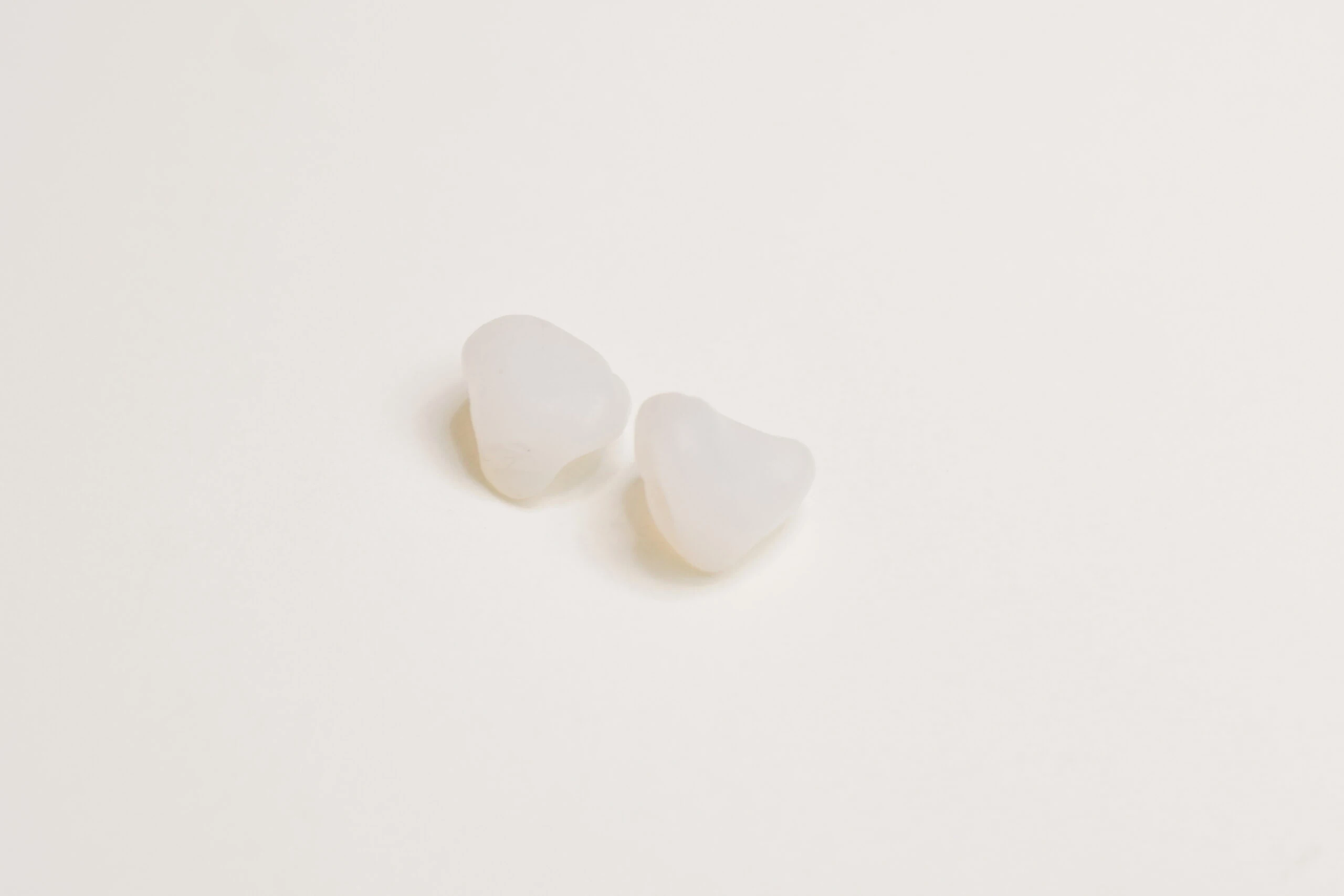 Those drawbacks are real, but unlike other plugs, these did not fall out while I slept. They felt less awkward when I lay on my side, and they definitely reduced the noise. Initially, they seemed like a useful sleep aid worth trying.
Update: day two
I went to bed expecting another comfortable night, but the remaining noise, the feeling in my ears, and the stickiness bothered me enough that I could not sleep. In the end I removed them. Perhaps something else was contributing to my sleeplessness.
Update: one week
I do seem to sleep more deeply with them in. However, the moisture makes my ears itch, which sometimes wakes me during the night.
Update: a few months later
Eventually, having anything in my ears bothered me too much to sleep, and I stopped using them. In the end, they were not worth buying for me.
Mack's Pillow Soft silicone earplug listingsView listings on Amazon Ad / Amazon Associates link
Related articles
Updates and contact: X @riragoncom.