View Sony α7R III (ILCE-7RM3) on Amazon (Ad)
News coverage from the time lists the price at about ¥370,000. I bought the FE 24–70mm F2.8 GM lens at the same time.View Sony FE 24–70mm F2.8 GM (SEL2470GM, original model) on Amazon (Ad)
That lens was around ¥250,000, if I remember correctly. With storage and other accessories, I recall spending roughly ¥700,000 in total. An expensive purchase. Sony α7R III news from the time:Search Amazon for SMC Takumar 50mm F1.4 (Ad)
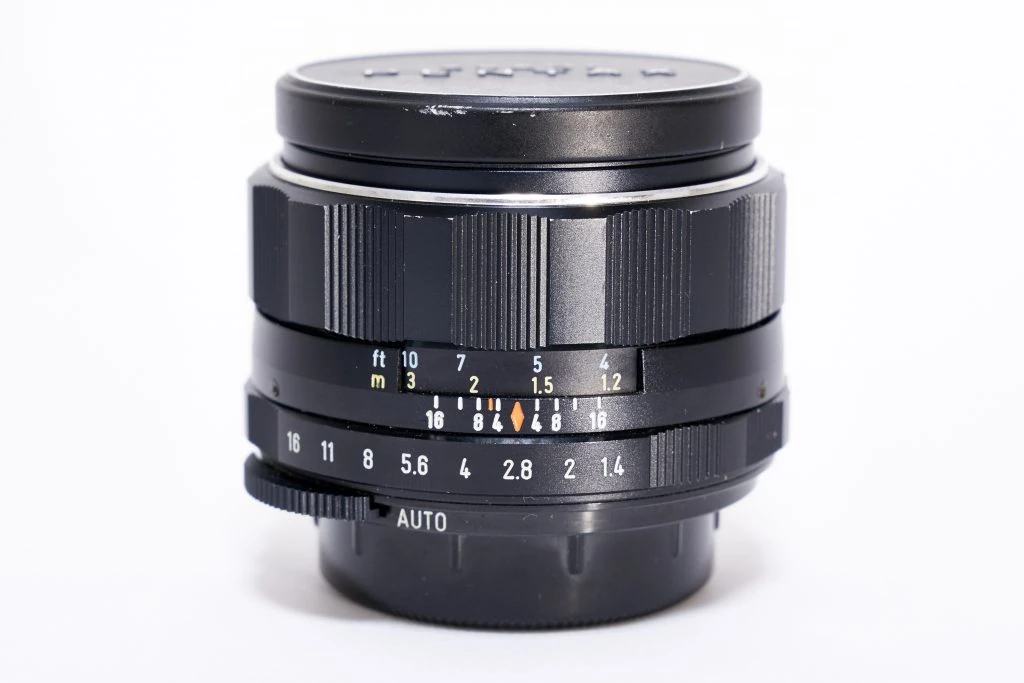 Although this was an approximately 30-year-old lens in my account, stopping it down produced sharp images approaching those from modern lenses. It also makes the character of an old lens easy to enjoy. Accessible, inexpensive, sharp when stopped down, and capable of attractive blur: it is easy to see why it is popular. 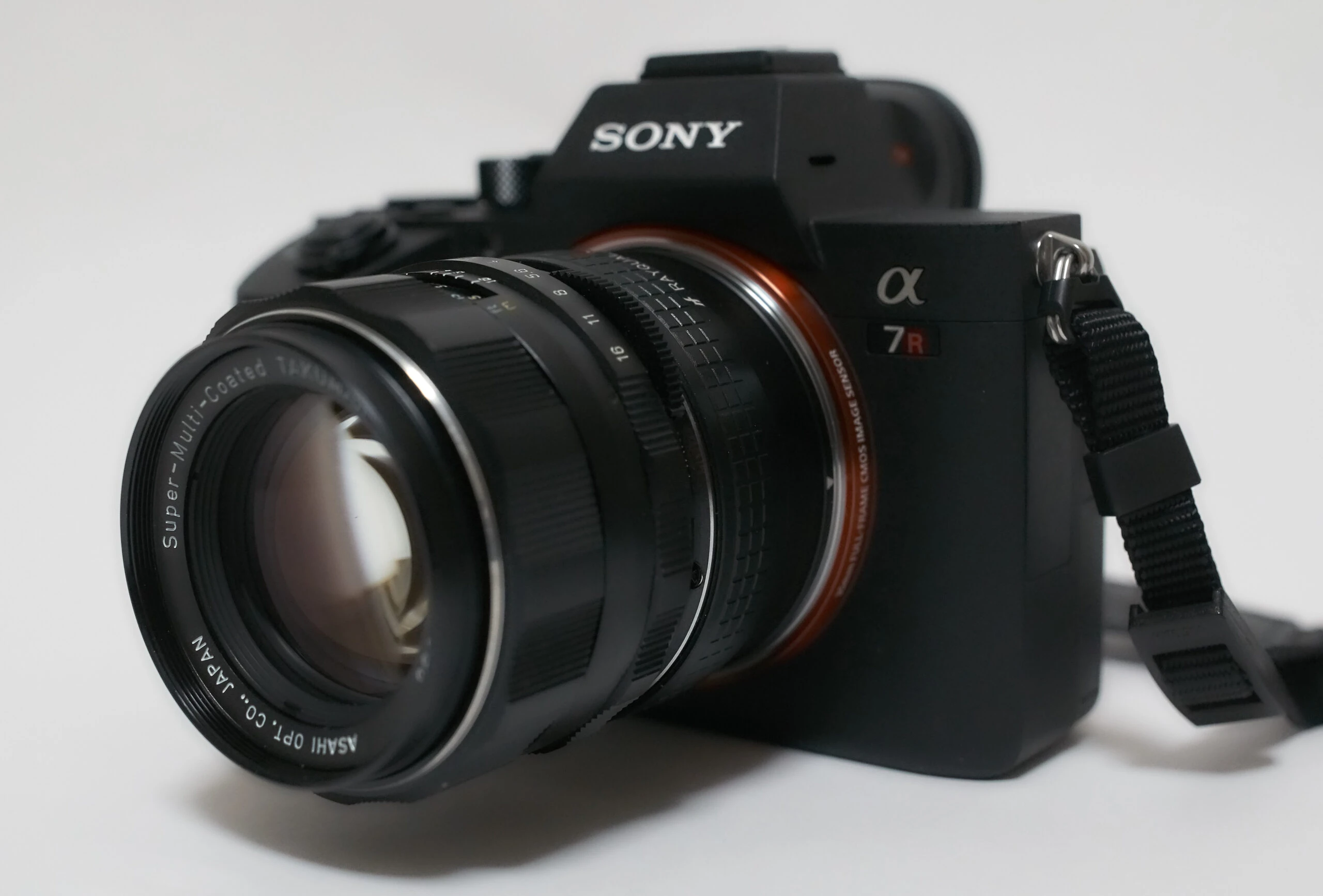 The biggest advantage of using an old lens on a modern body is the electronic viewfinder. Focus peaking and magnification help you focus accurately. This lens has some discoloration, which gives a slightly warm color cast. That is part of its character. At F1.4, the edges smear quite strongly and the background blur is pleasing. Vignetting adds character too. Stop down to F2.8 and it becomes much crisper. If you like the sample photos, picking an old lens that appeals to you can be a lot of fun.           If mount adaptation is unfamiliar, the basic combination is a Sony E-mount camera and an M42-to-E-mount adapter.Search Amazon for M42-to-Sony E-mount adapters (Ad)
Electronic contacts are not used, so you operate focus and aperture manually. 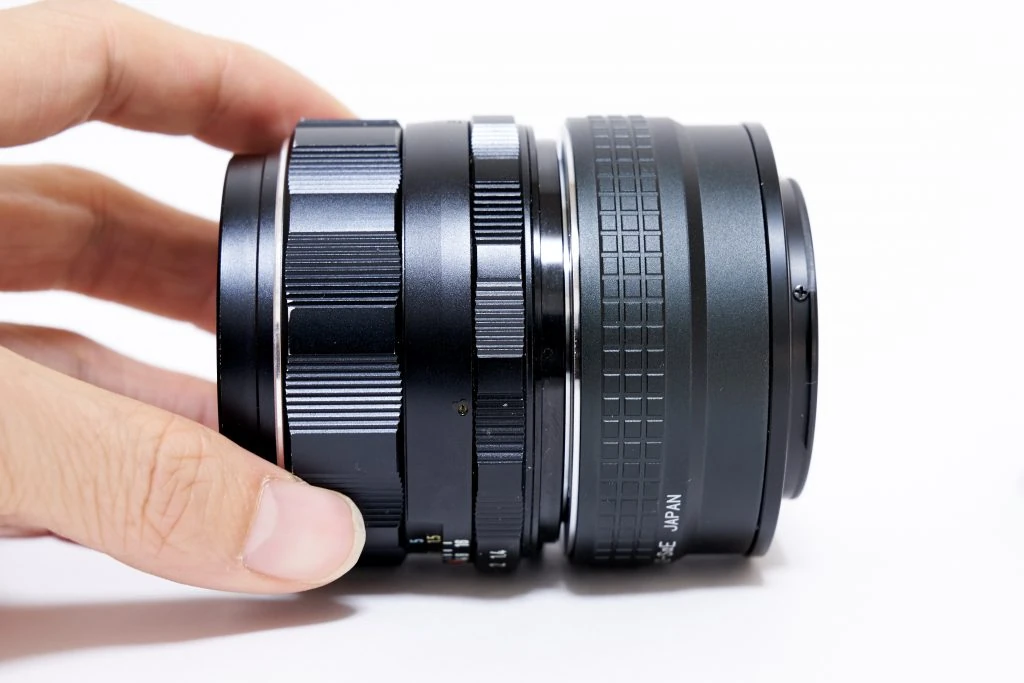 ## Experiment 2: macro and microscope lenses As with old lenses, a little ingenuity lets you fit all sorts of optics. Macro photography has a long history of magnification techniques: bellows with microscope objectives, enlarger lenses with bellows, reversed wide-angle lenses, old macro lenses, teleconverters, and more. By chaining adapters into a widely compatible format such as C-mount, you can attach a surprising range of lenses. A helicoid, a mechanism that adjusts the lens extension, is commonly added to set the effective flange distance. 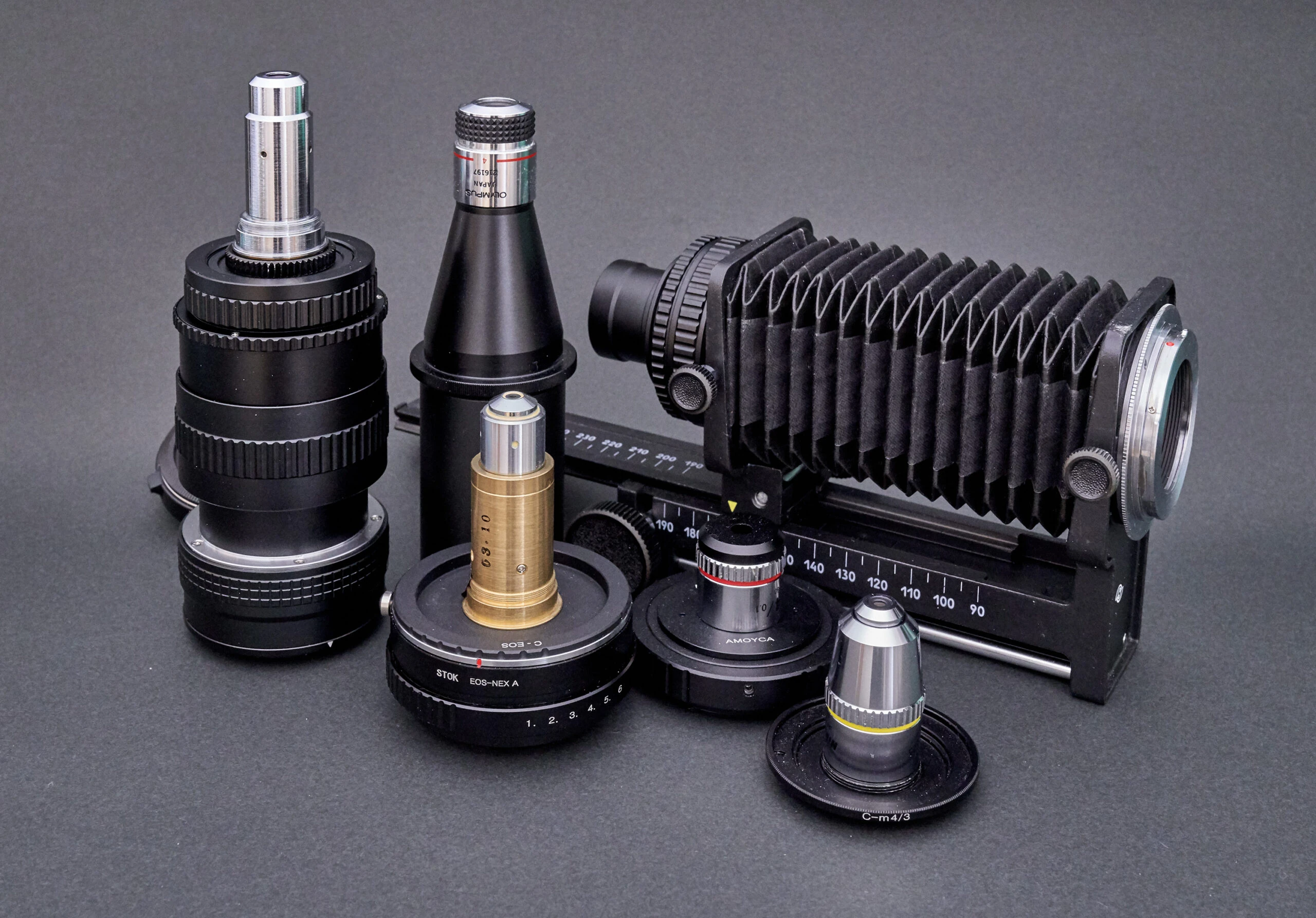 You can assemble something like this. 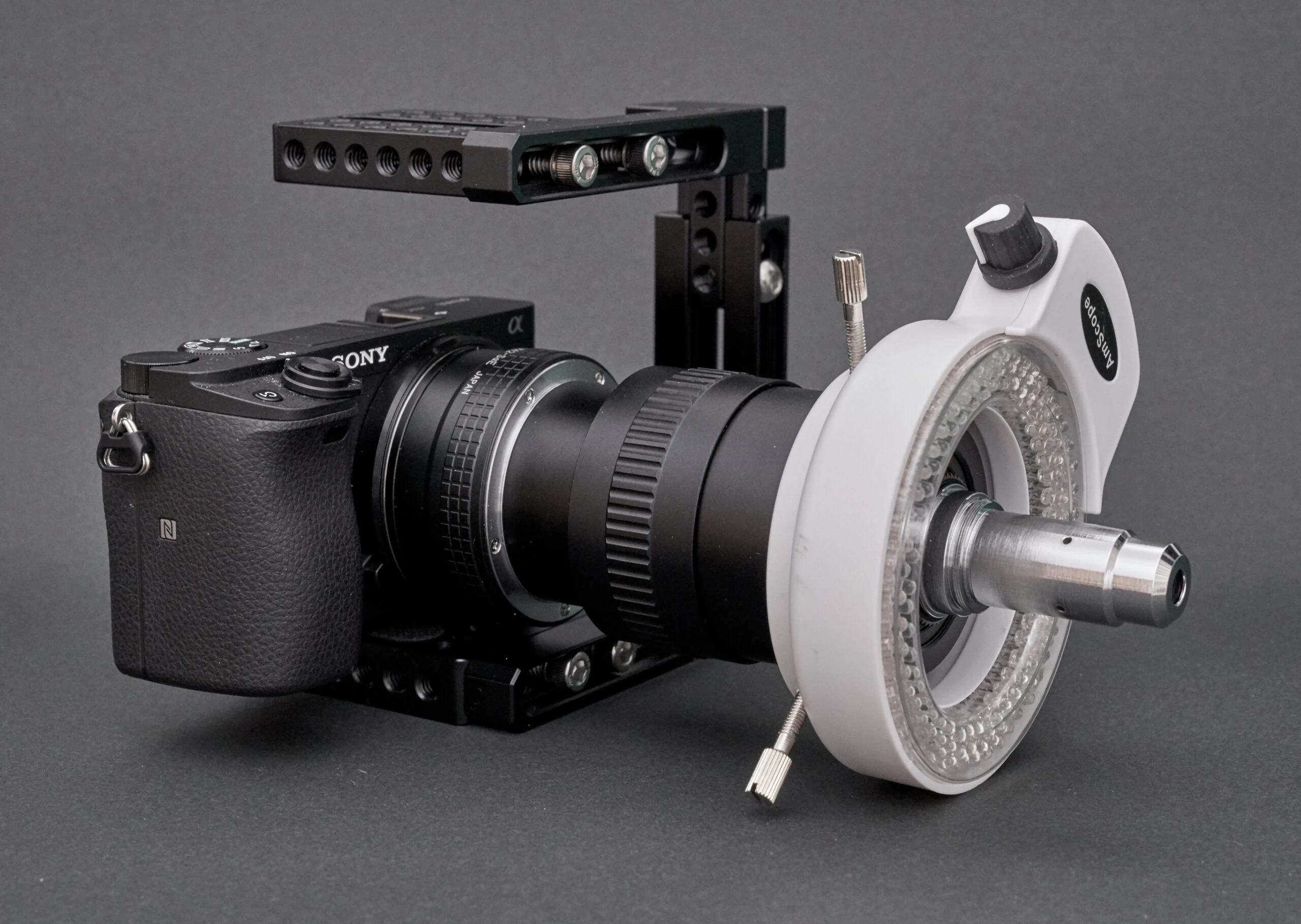 It can photograph mites and similar subjects. The shallow depth of field requires some ingenuity, but it is an interesting hobby in its own right.  One of the simplest methods is to add an extension tube, an adapter that changes the lens-to-sensor spacing for close focusing.Search Amazon for Sony E-mount extension tubes (Ad)
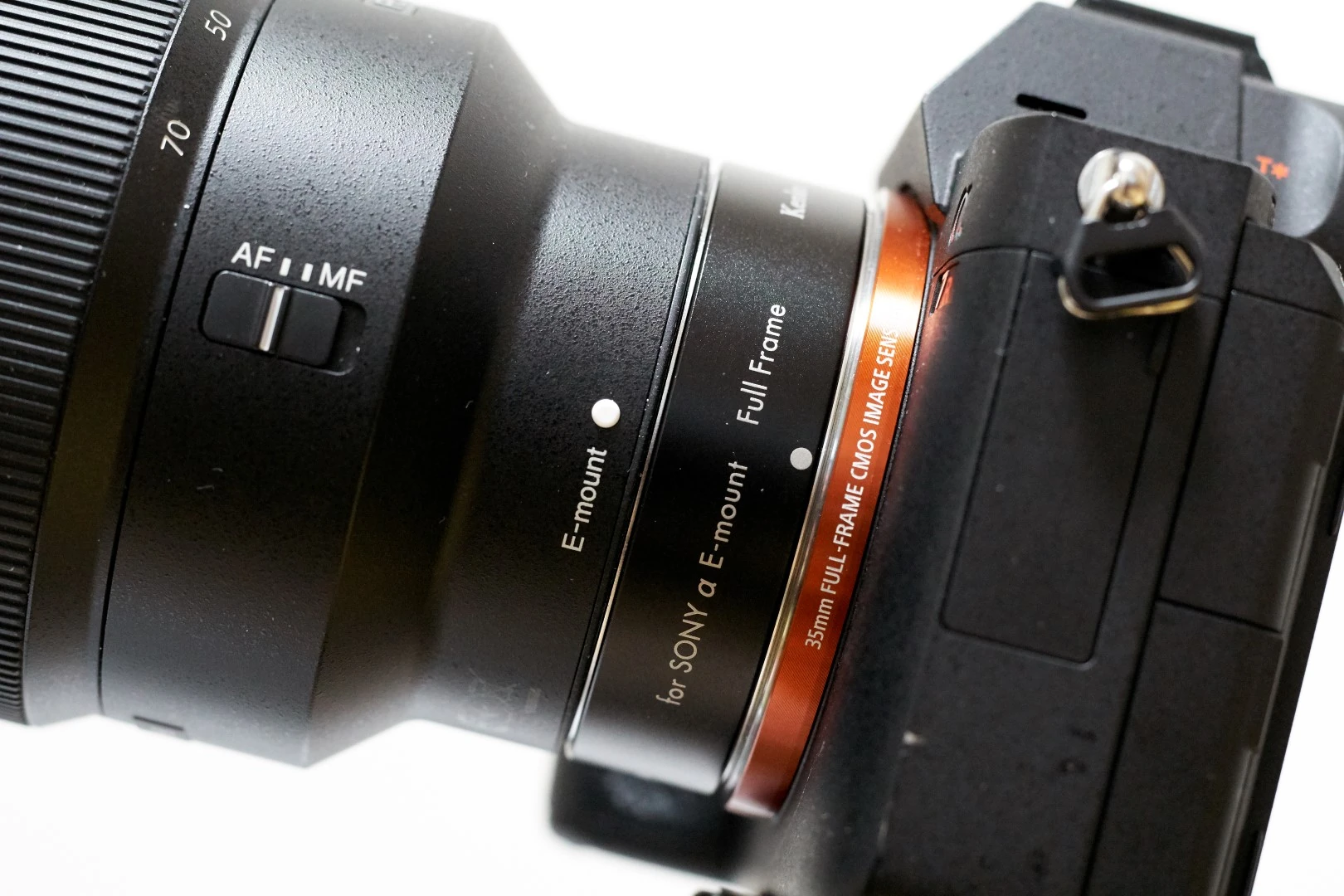 Even that provides substantial close-up capability for subjects such as coins and flowers. 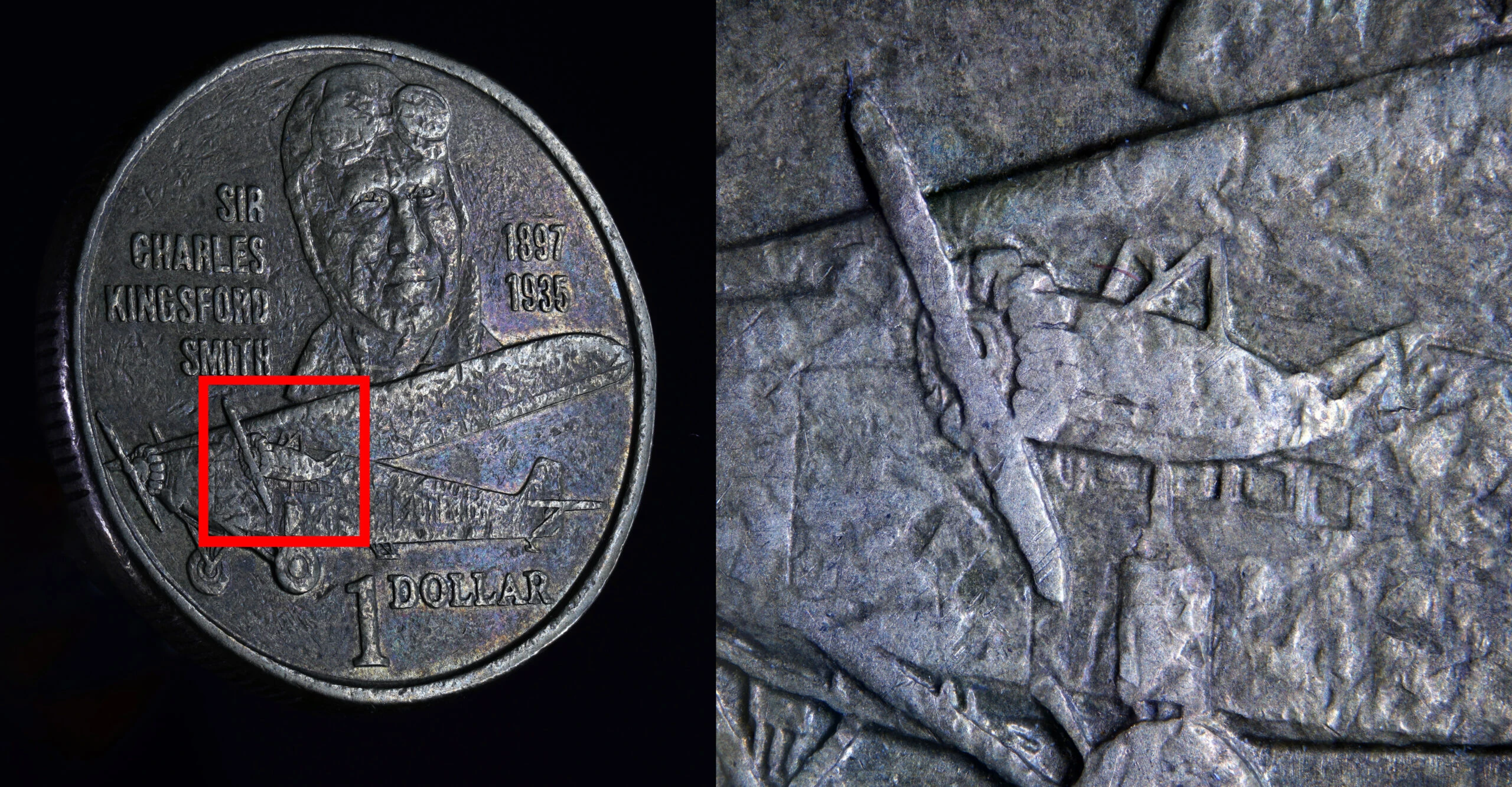 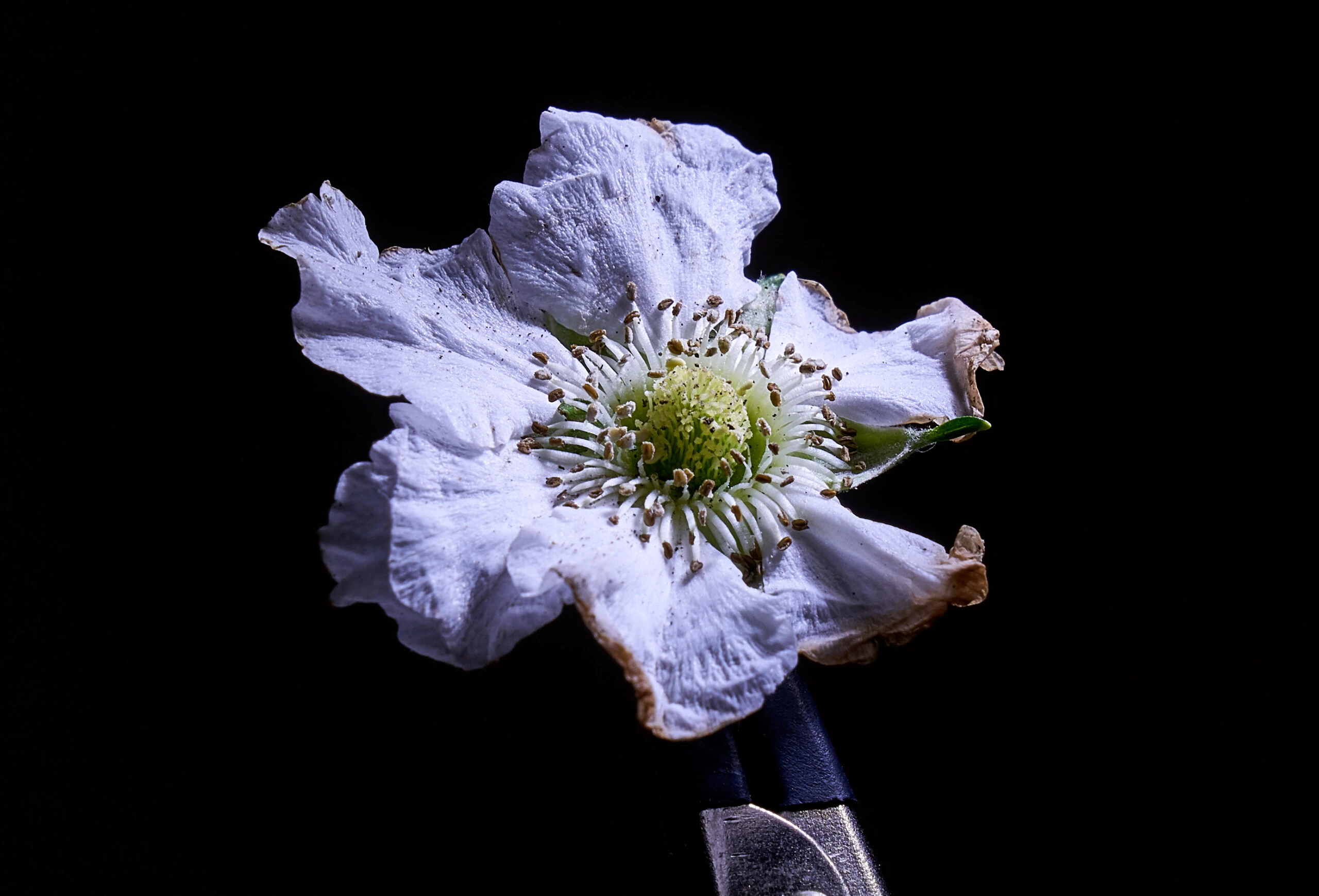 ## Experiment 3: a wonderfully strange lens There is an unusual old lens with built-in color filters: the JANPOL COLOR PZO, an 80mm M42-mount lens. As an enlarger lens, it has no focusing ring and needs a helicoid.Search Amazon for JANPOL COLOR PZO 80mm (Ad)
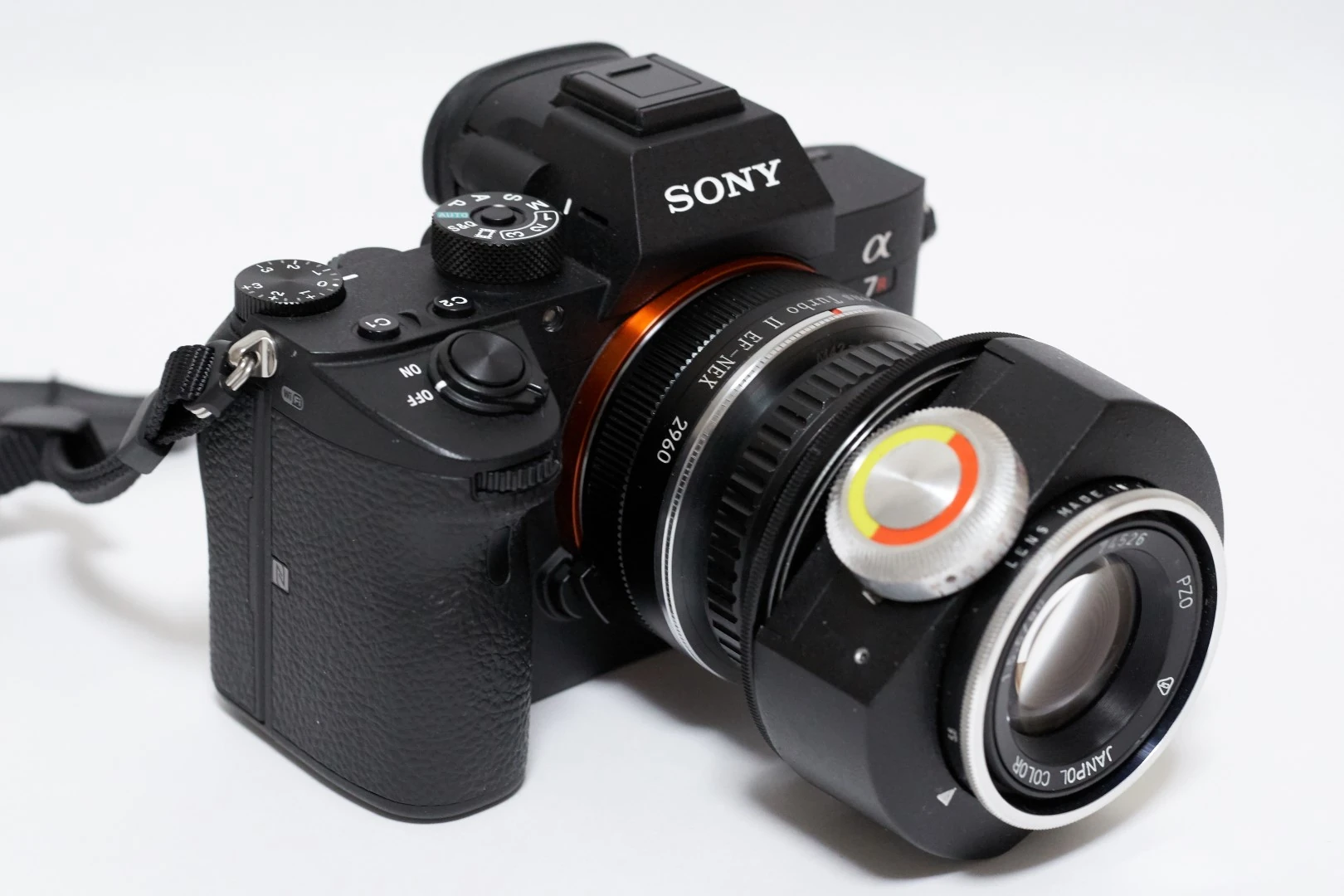 Turning the dials brings blue, yellow, and purple-looking filters into the optical path, producing colorful, retro photographs. The lens originally belonged to an enlarger, a machine for enlarging a photographic image onto printing paper. See Wikipedia for more detail.Search Amazon for M42-to-M42 helicoids (Ad)
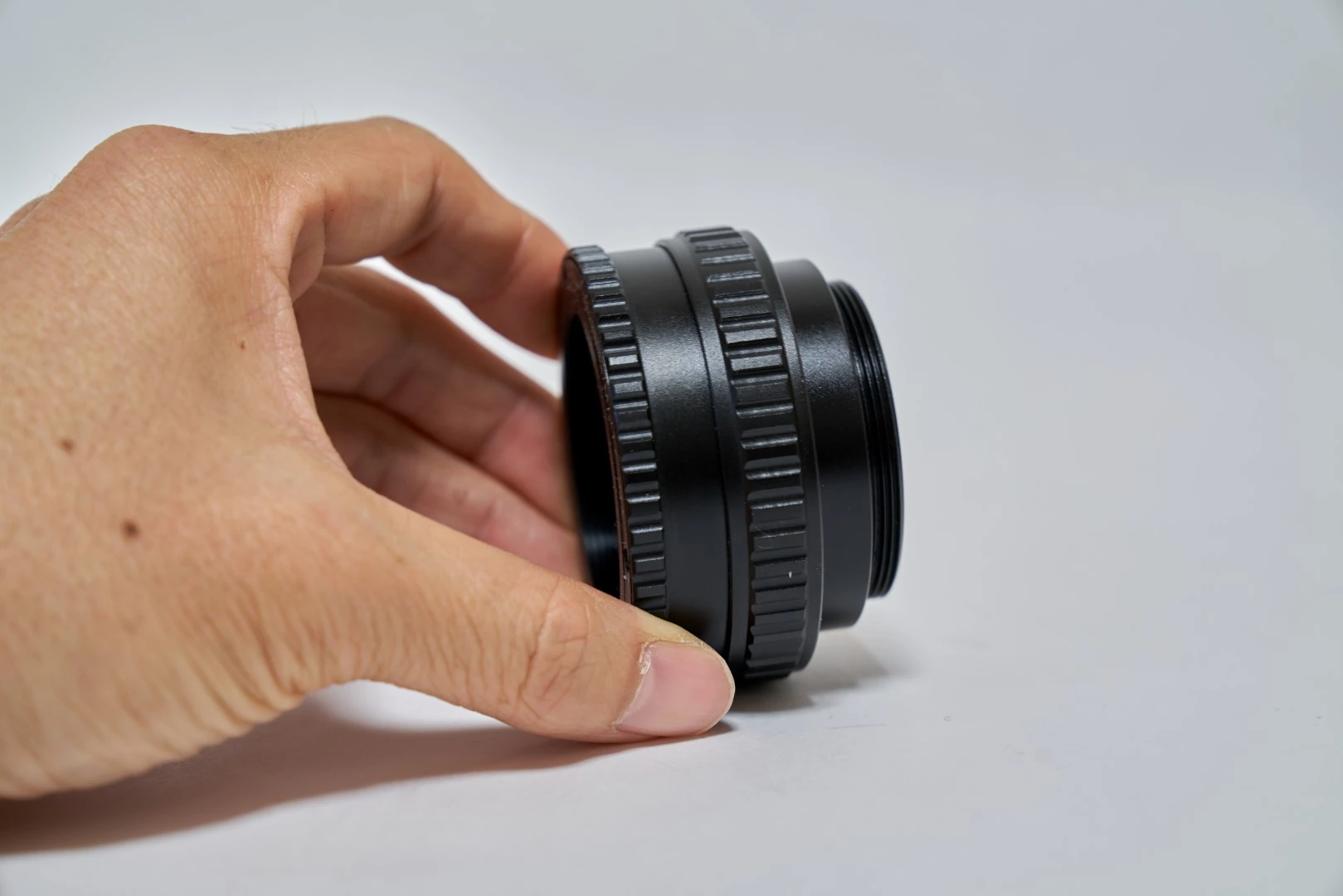 I could attach an M42-to-E adapter and use it on a Sony α7 just like that. However, 80mm felt a little long, so I decided to add a focal reducer. 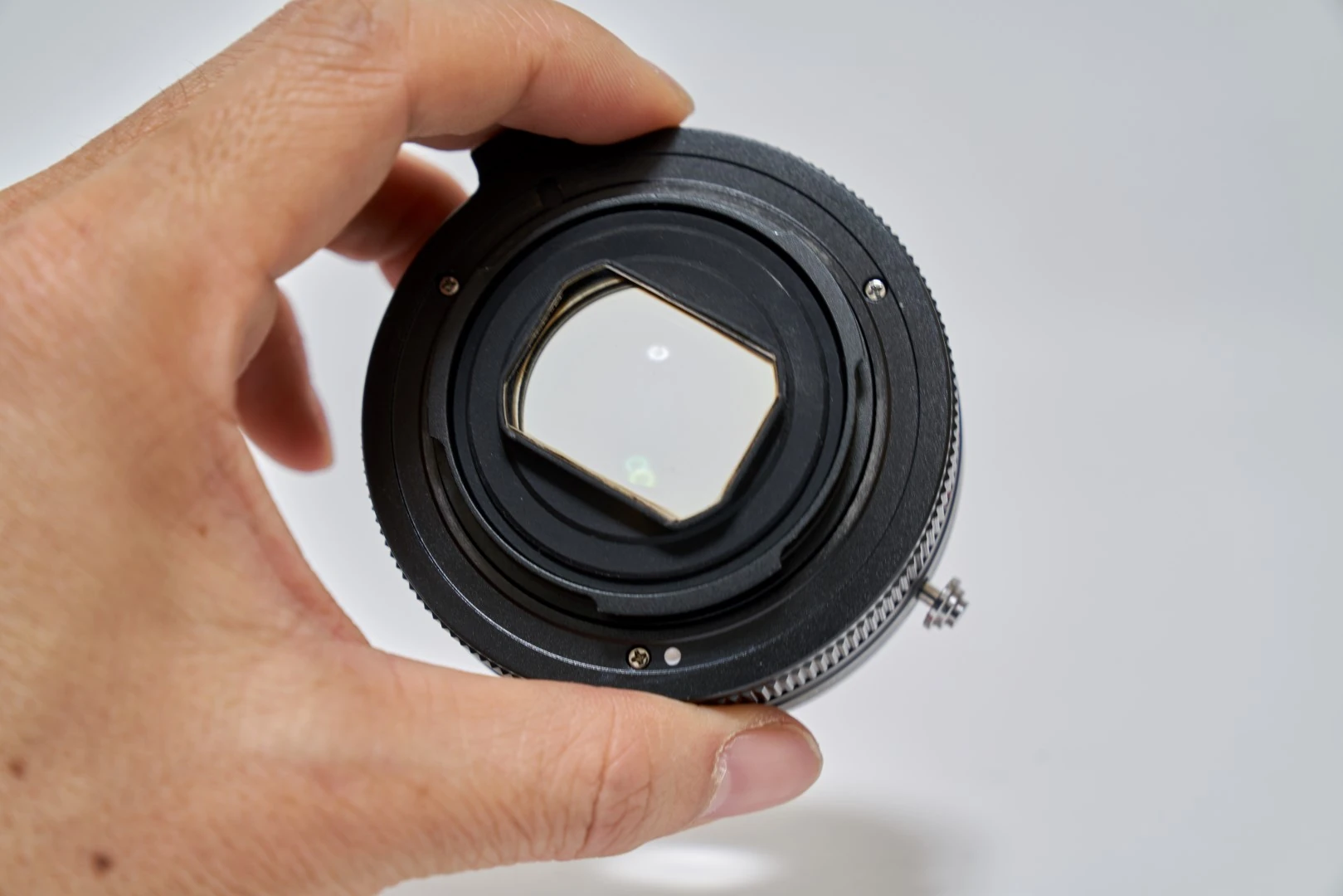 At 0.7×, 80mm feels like 56mm. There is heavy vignetting, but I still thought it preferable to the 80mm view. Buying a dedicated M42-to-E focal reducer would work, but spending tens of thousands of yen on an adapter just for M42 felt frustrating. Converting different lenses to EF first lets me share adapters across them. I bought an M42-to-EF adapter and fitted it to make the lens present an EF mount.Search Amazon for M42-to-Canon EF-mount adapters (Ad)
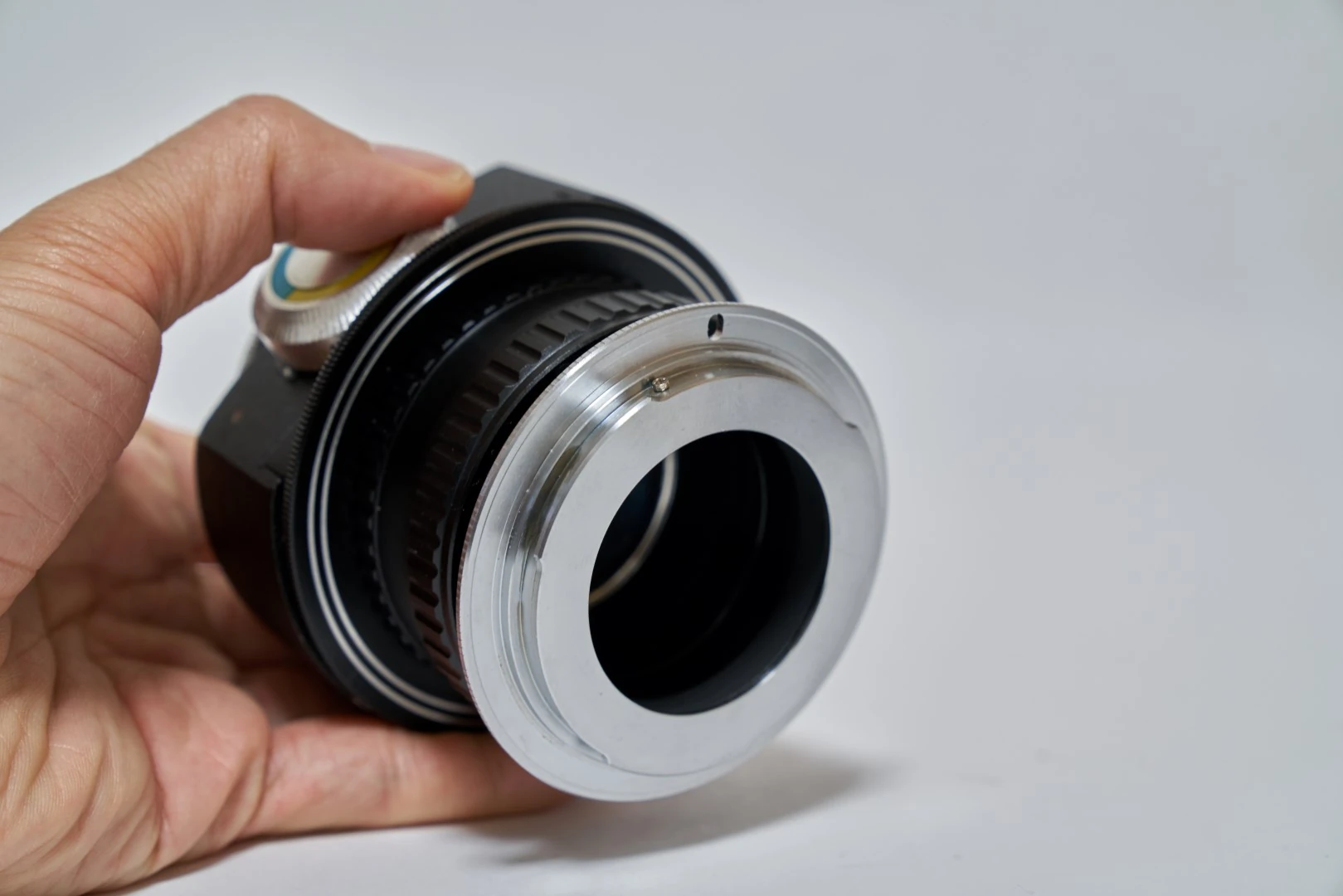 Next, I attached a Zhongyi Lens Turbo II EF-NEX.View Zhongyi Lens Turbo II EF-NEX on Amazon (Ad)
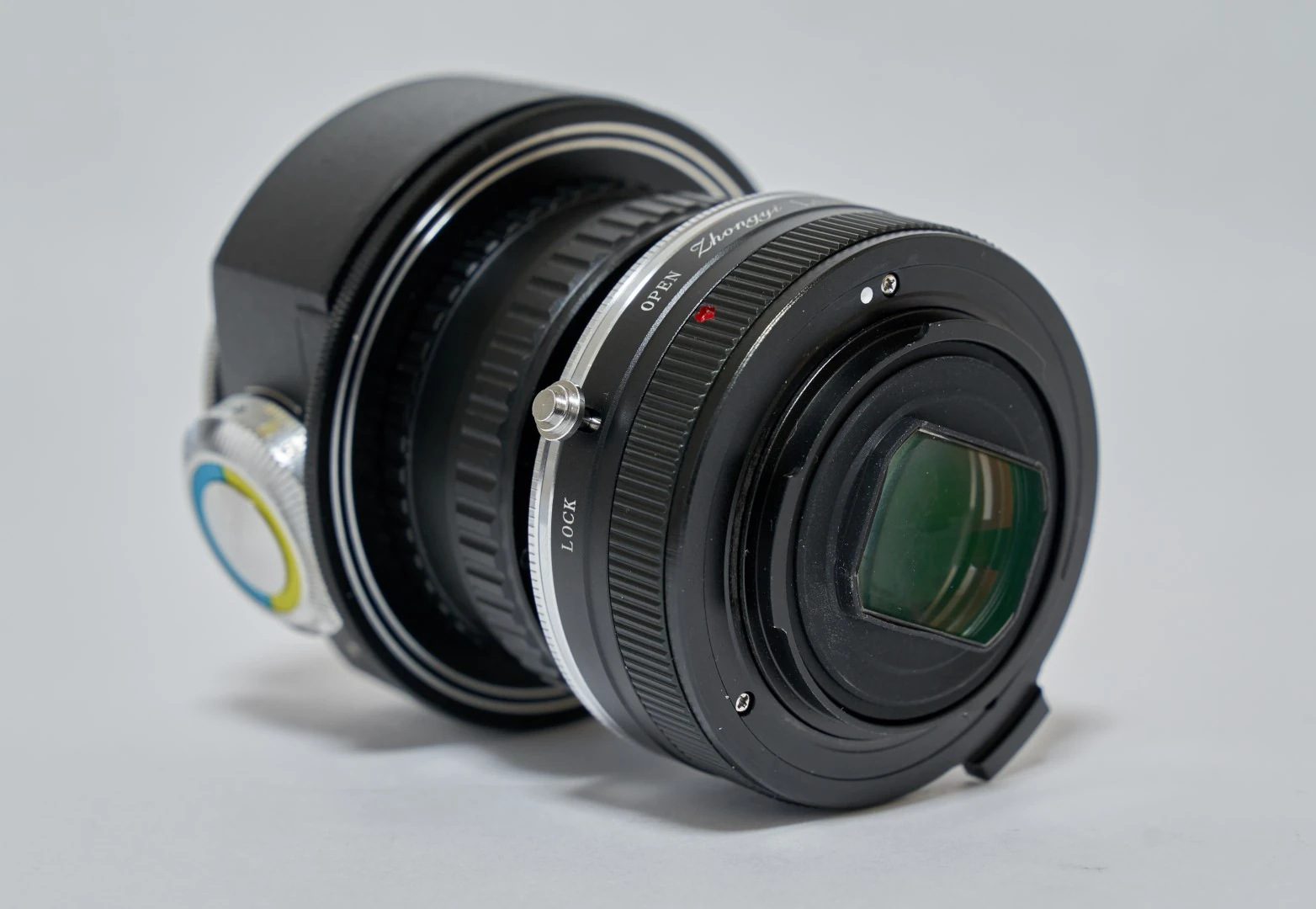 That completed the preparation. The JANPOL COLOR PZO has no lens cap. A cap from a Canon 50mm lens fitted well enough for the moment, although it falls off easily. 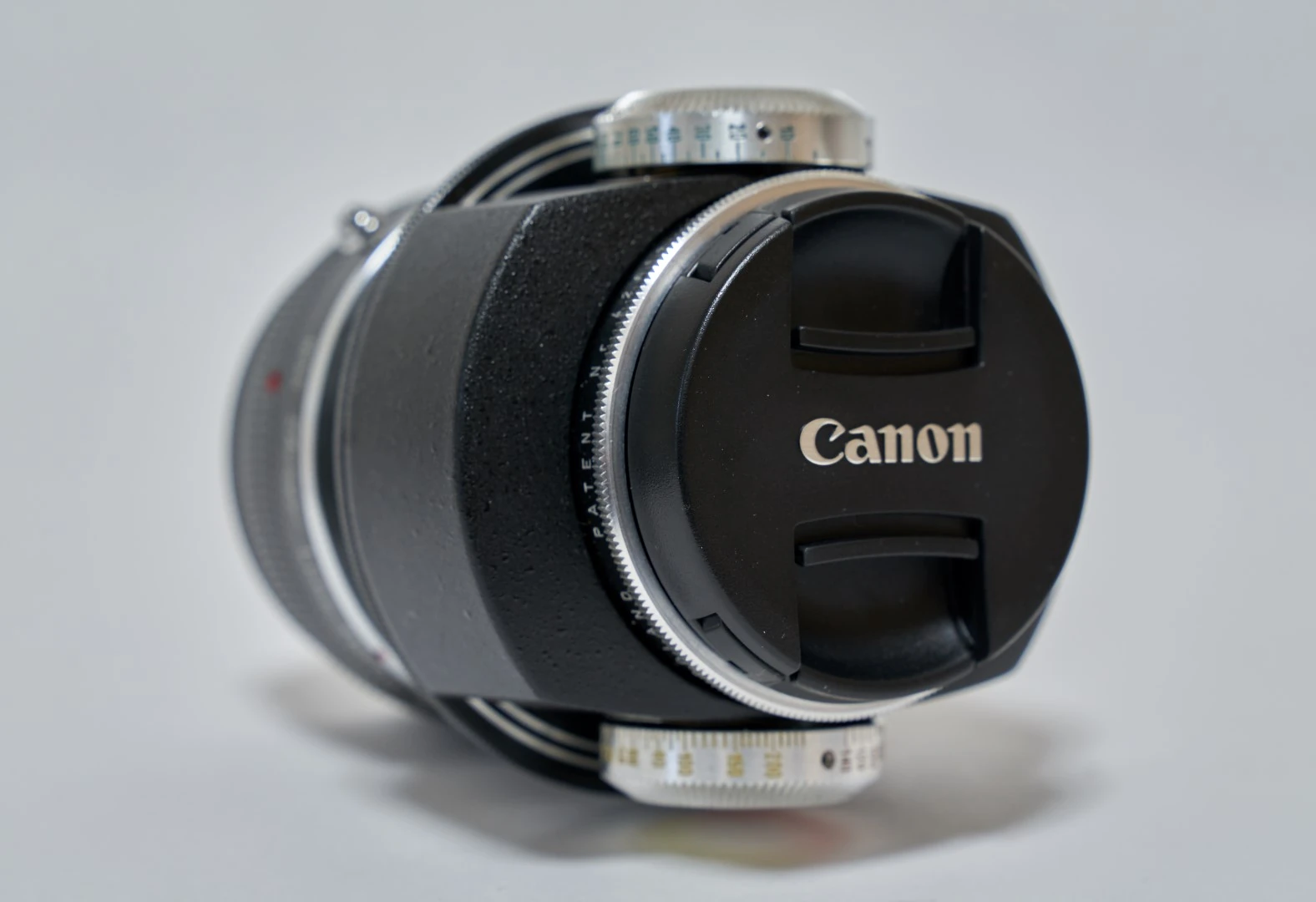 It can take colorful photographs like these. 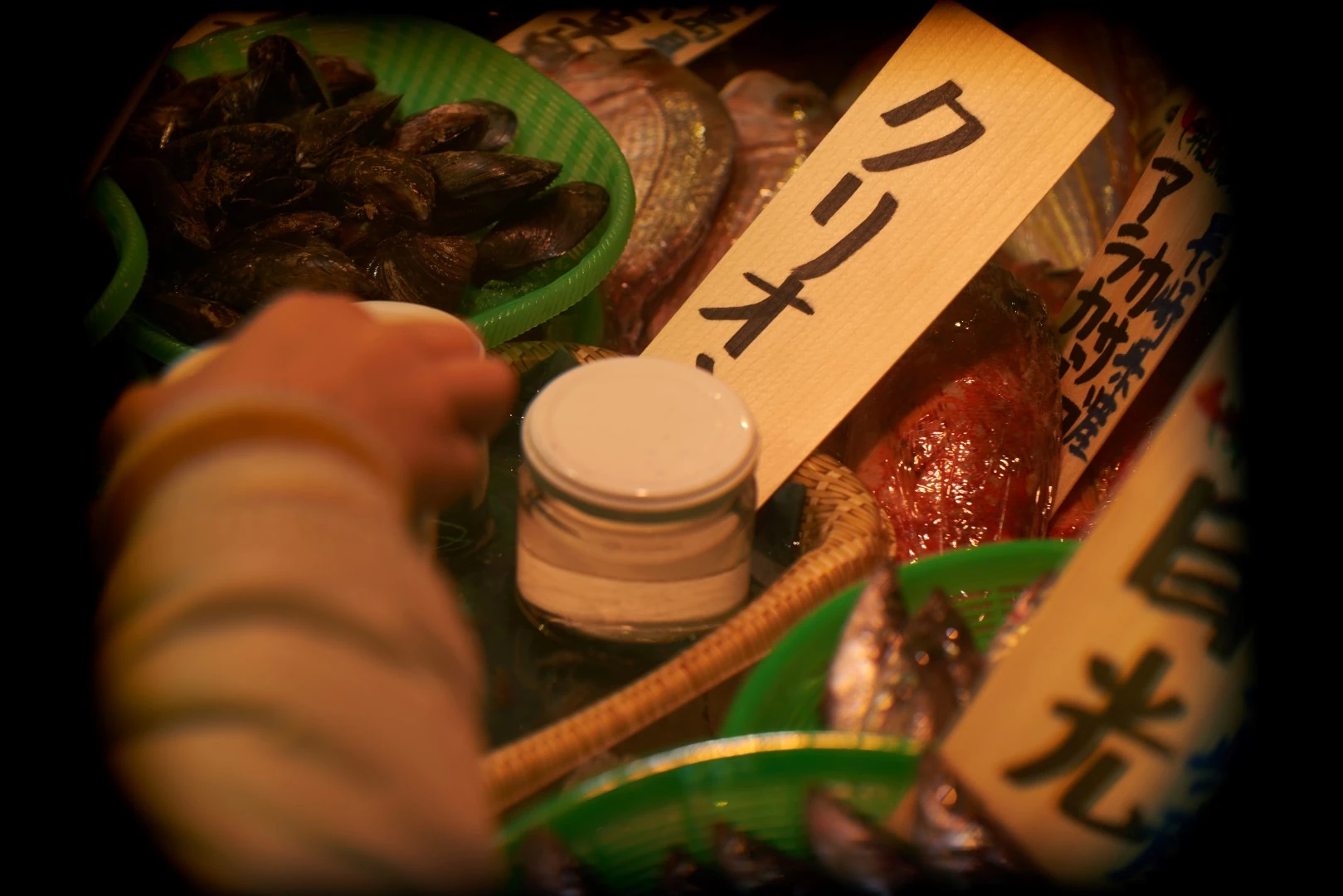 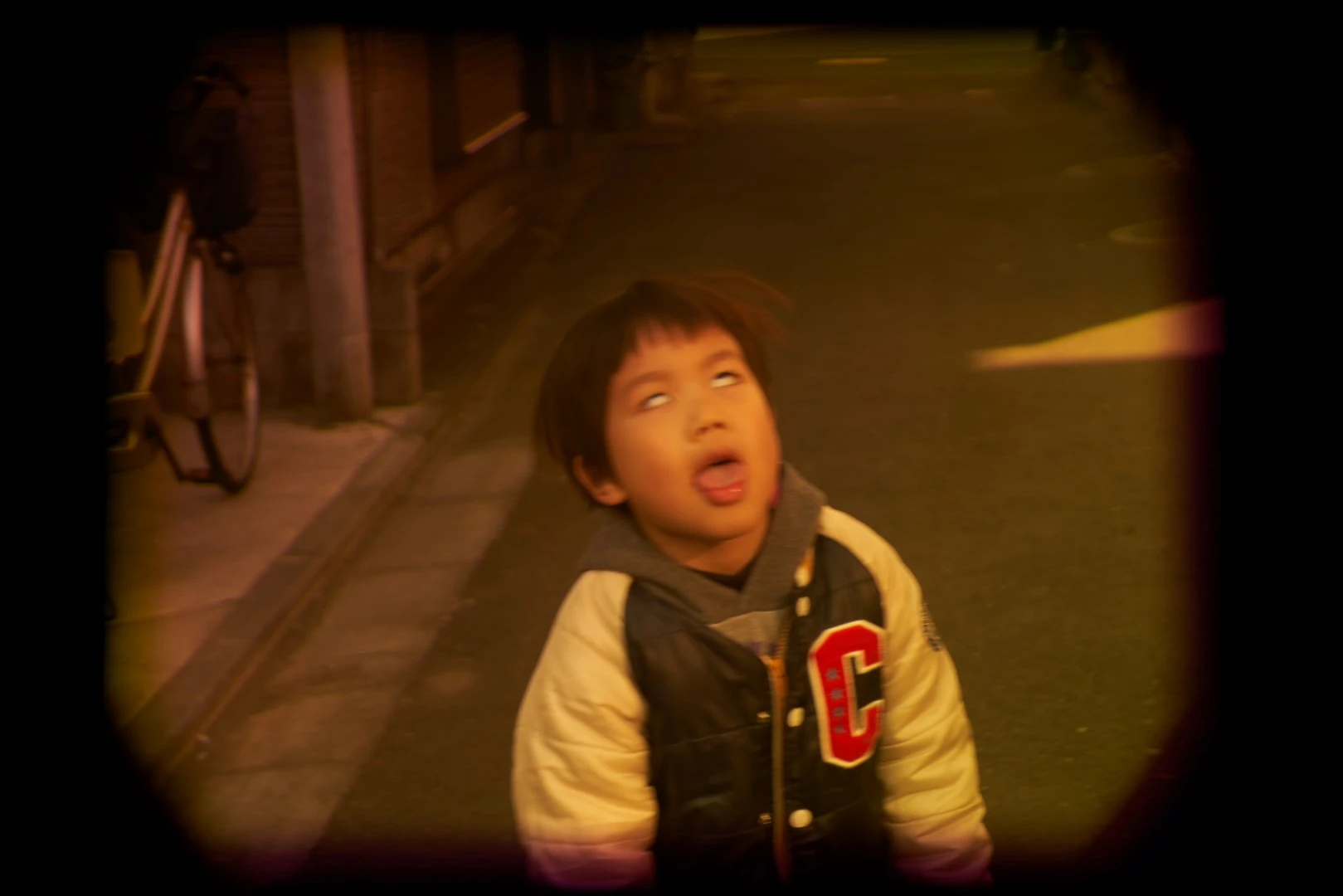   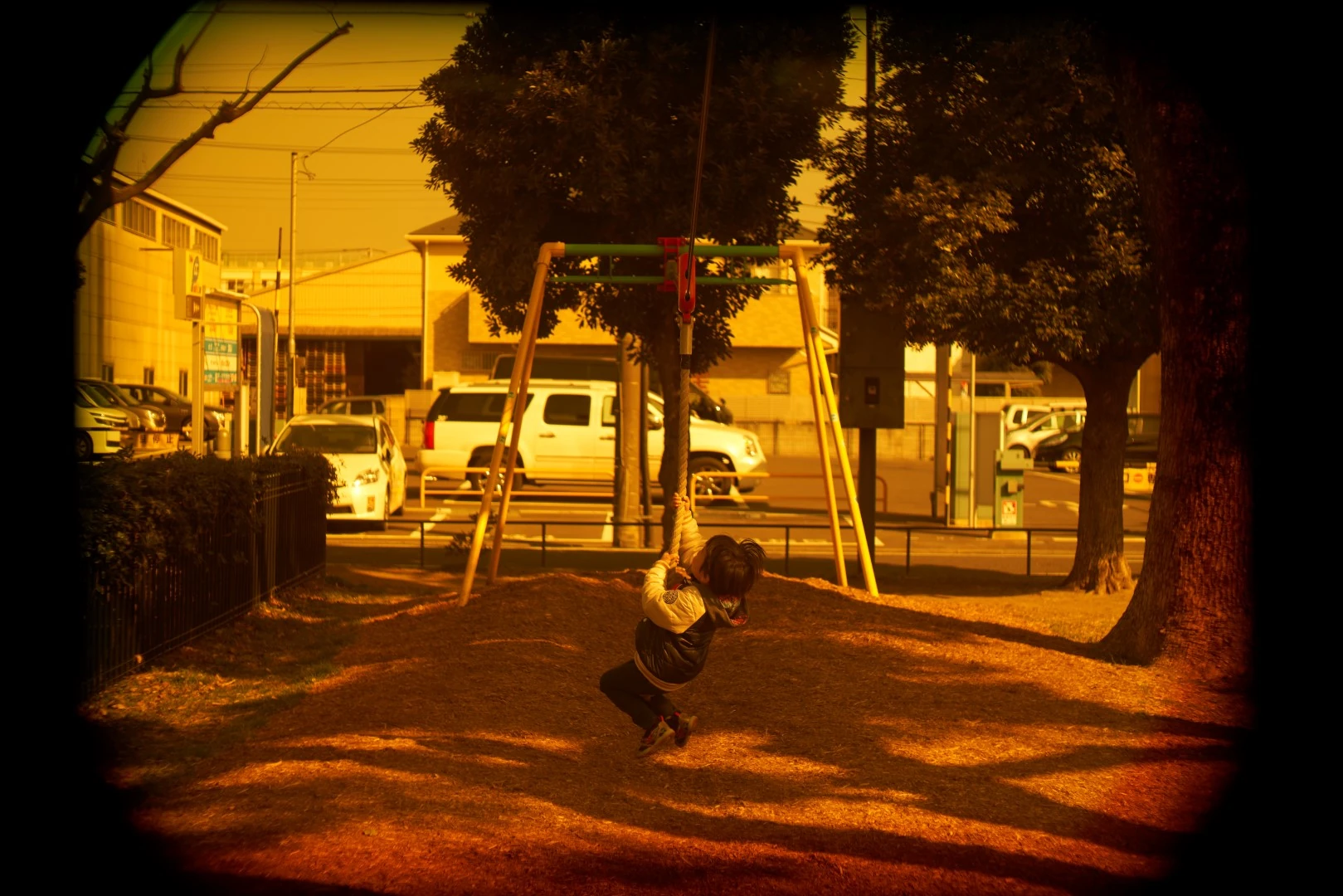 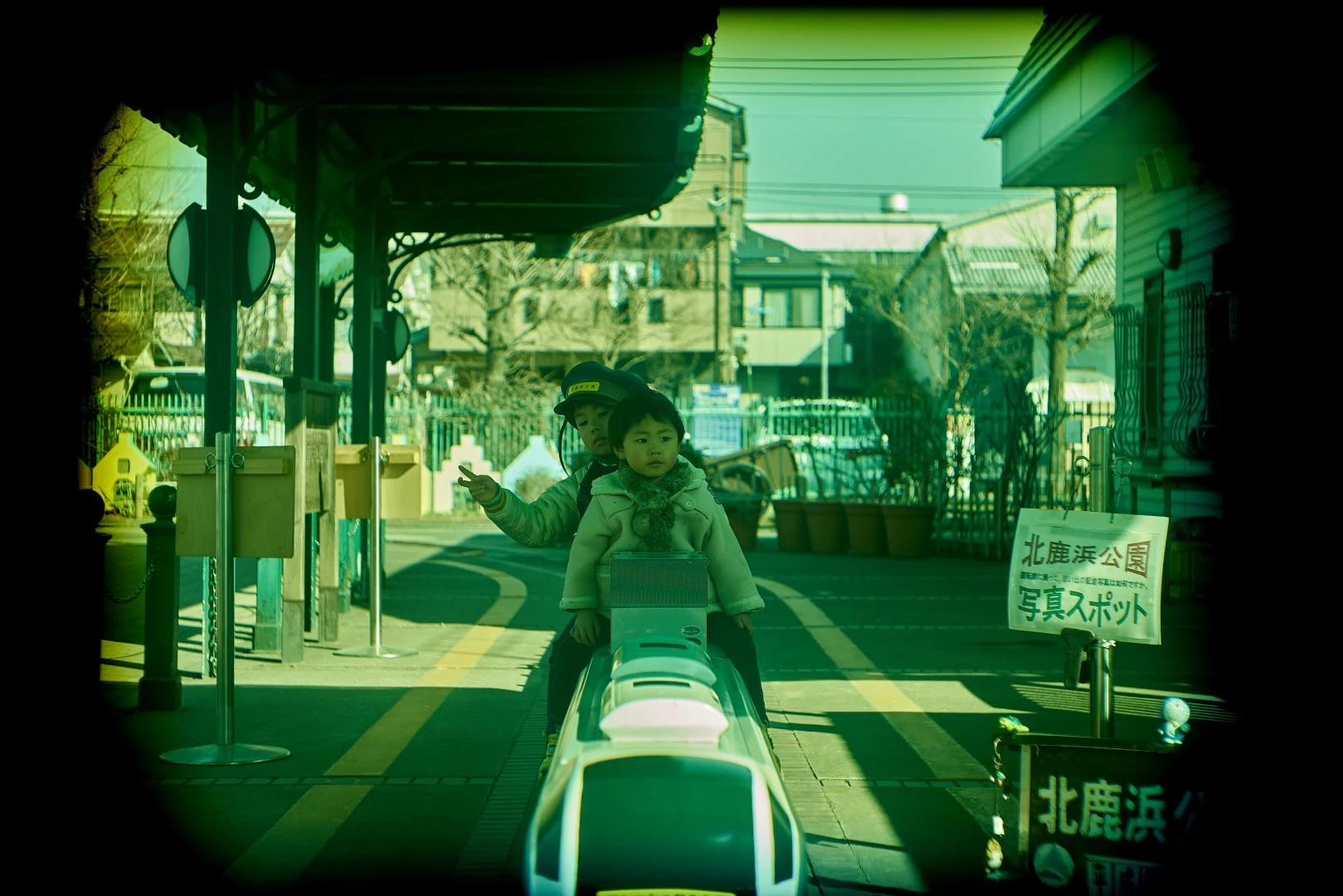  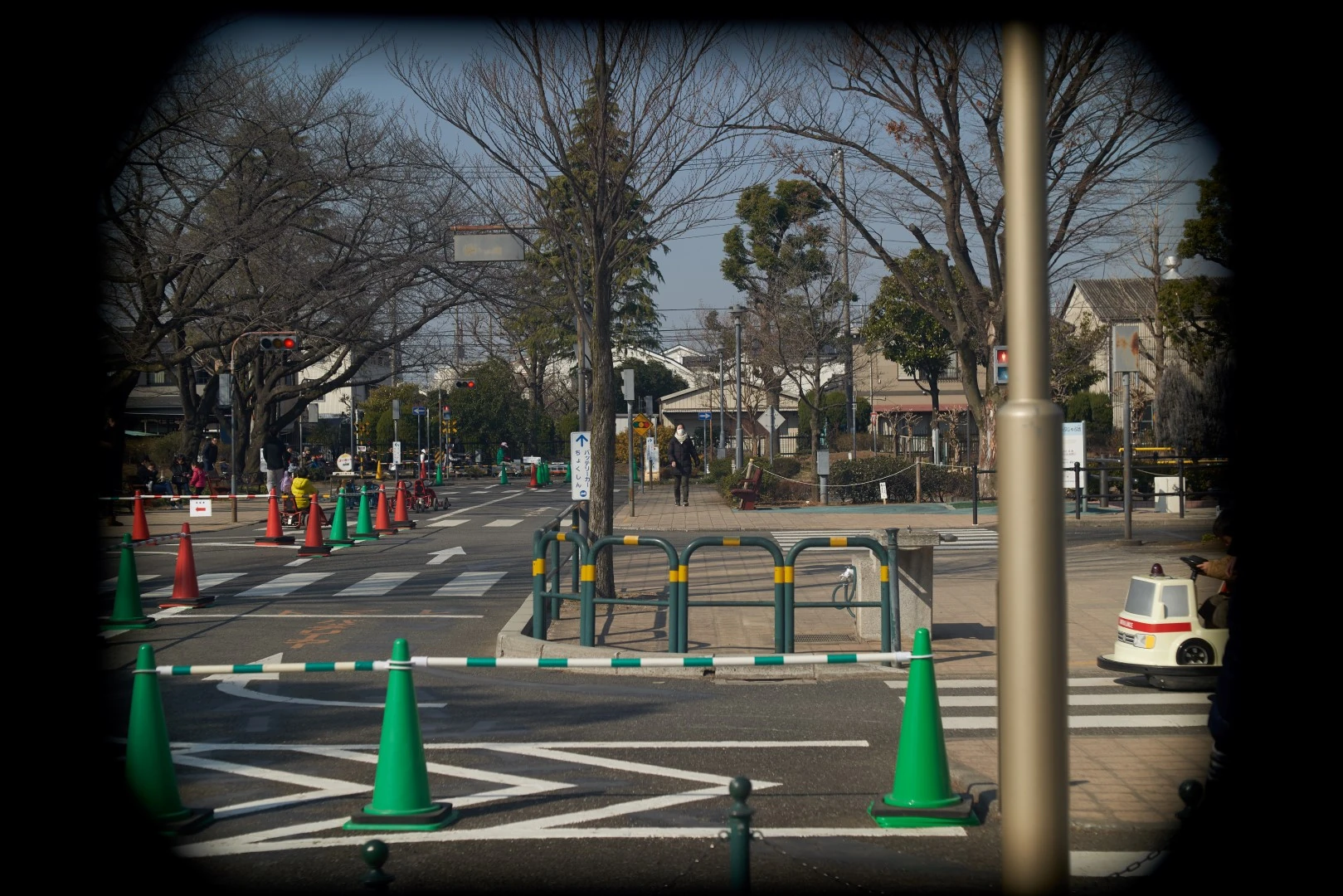  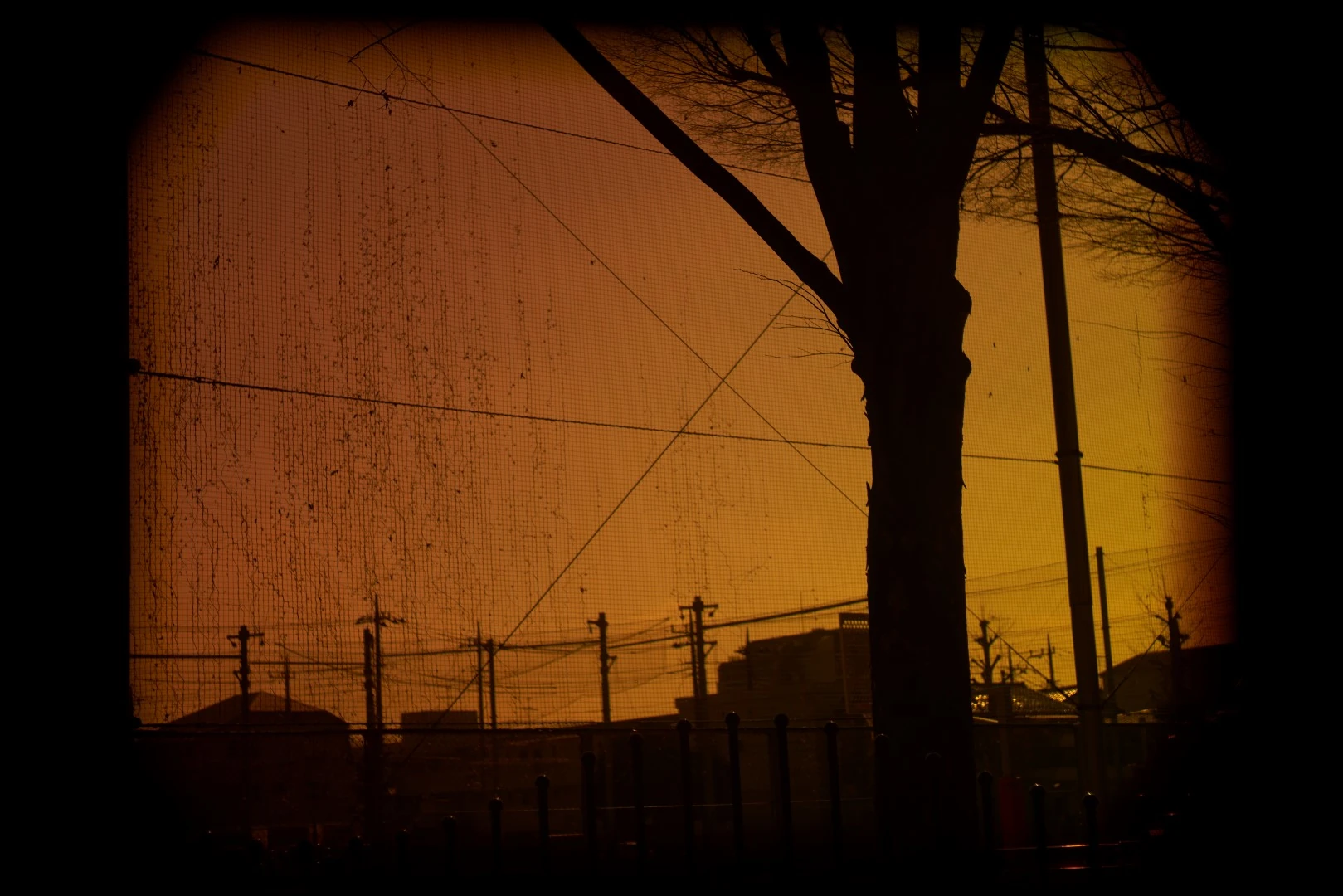   After seven years, I feel I have had plenty of enjoyment from the Sony α7R III. Buying one used now and experimenting with unusual combinations could be fun too. At the time of writing, the newest Sony α bodies could cost around ¥500,000–1,000,000, which is a substantial amount.Sony α7R III (ILCE-7RM3)View details on Amazon Ad / Amazon Associates link
Sony FE 24–70mm F2.8 GM (SEL2470GM, original model)View details on Amazon Ad / Amazon Associates link